
Assessment and retrofit.Diagnosis and repair of existing structures. Shall we look at your structure?
Photo: Jon Tyson / Unsplash
DDES assesses existing buildings in Colombia: it diagnoses cracks, corrosion and settlement, carries out seismic vulnerability studies under chapter A.10 of the NSR-10 and designs the retrofit. It works from Barranquilla, on the coast and in the rest of the country.
- Code
- NSR-10
- Deliverables
- 5
- Coverage
- Nationwide (Colombia)
What is structural pathology?
It is the study of the damage in an existing structure, such as cracks, corrosion of the reinforcement or settlement, to find its cause and define the repair. When a building is extended, changes use or is strengthened, the NSR-10 also requires an assessment of its seismic vulnerability (chapter A.10).
Cracks, corroded steel, settlement or a change of use: we assess existing buildings, find the cause and design the retrofit. On the coast, chloride-induced corrosion is the most common cause of damage in concrete structures more than thirty years old.
How a vulnerability study is done and how to read its indices: seismic vulnerability study.

On-site diagnosis
Cores, rebound hammer, ferroscan to locate the reinforcement, carbonation depth and chloride content. The tests confirm what the visual inspection suggests.

Seismic vulnerability
We assess the existing structure under chapter A.10 of the NSR-10 and determine whether it must be strengthened for its current use or for a new one.

Retrofit
Concrete jacketing, steel plates and carbon fiber, steel bracing and foundation underpinning. We design the solution and support its construction.
What is the process?
Inspection
Survey of the damage and the structure.
Testing
Cores, ferroscan, carbonation and chlorides.
Diagnosis
Cause of the damage and condition of the structure.
Retrofit
Design and support on site.
What do we deliver?
- Pathology report with photo record
- Test results
- Seismic vulnerability study
- Retrofit design and drawings
- Support on site
Photo: Michael Bader / Unsplash
Frequently asked questions
Is my building safe?
An initial inspection tells you whether there is an immediate risk and how urgently you need to act. The full diagnosis, with testing, tells you how serious the damage is and what the repair will cost.
Can a building be strengthened while people live in it?
In many cases, yes. We design the retrofit to be built in stages and with as little disruption to the residents as possible.
What does the law require for an old building?
If the use changes, or the building is extended or its structure is modified, the NSR-10 requires an assessment of its vulnerability and, if needed, a retrofit.
When is a crack dangerous?
Fine cracks in the plaster are usually shrinkage. The ones to worry about are diagonal or stair-step cracks, cracks that go through the wall, cracks wider than one millimeter, cracks that grow, and cracks in beams or columns. We explain it in this guide.
Projects
All projects
Altos de Solemio
Phased construction oversight of a development of residential towers and a commercial lot, with the redesign of its site works.

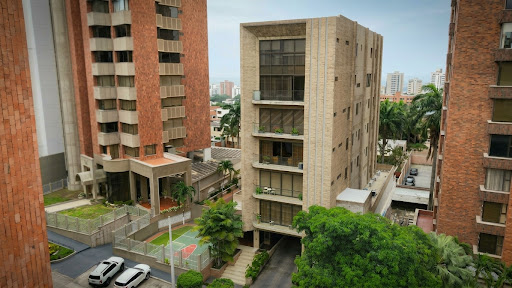
Edificio Ébano
Construction oversight of a building with the concrete checked in the laboratory, delivery by delivery.

Industrias Cannon
Structural design and construction oversight of an industrial plant, from the building permit to the structure.
Related guides
NSR-10 toolsSeismic vulnerability study: what it is, when the NSR-10 requires it and what it includes
Chapter A.10 compares the existing structure with a new one and expresses it in two indices: overstress and flexibility.
When is a crack dangerous?
How to tell a cosmetic crack from one that needs an engineer: width, direction, where it appears and whether it grows.

Existing buildings: when the NSR-10 requires an assessment and a retrofit
Changes of use, extensions, structural alterations and earthquake damage: what chapter A.10 requires.
Related services

Structural design
Concrete, steel and masonry buildings designed to the NSR-10, from the first concept to the reinforcement details.

Technical supervision
Independent technical supervision under Law 1796 and Title I of the NSR-10, before every concrete pour.

Construction oversight
We represent the owner: quality, schedule and budget on public and private projects.
Last updated:

Contact
Do you need to assess an existing structure?
Tell us what stage your project is at. A DDES engineer replies with a proposal for scope and fees.
Our team works in Spanish. You can write to us in English and we will get back to you.
Photo: Julia Taubitz / Unsplash